The people who will actually be in the room.
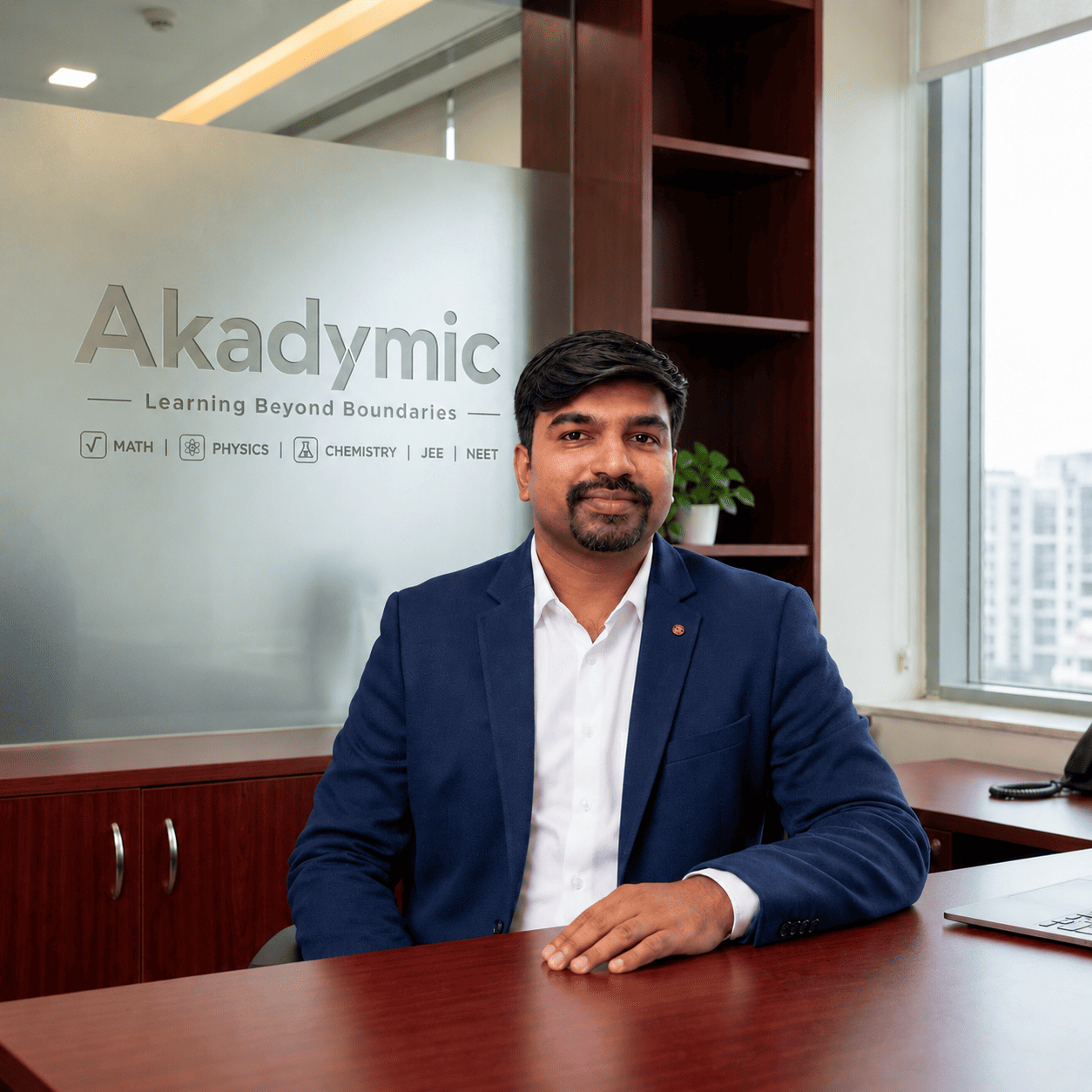
Anish Kumar. S
I have been teaching Physics, Chemistry and Mathematics for fifteen years — Classes 9 to 12, JEE and NEET, and at BTech and MTech level, including students preparing for GATE (Mechanical). I hold an ME.
For most of those years I taught one-to-one and in small groups, and I noticed the same thing every year: students rarely fail because a chapter is hard. They fail because they were handed a formula before they had any picture of what it described. Ask a student to define refractive index and many can. Ask them to predict what happens to the image when the object moves closer, and far fewer can — because nobody ever made them see it.
So the method I teach with is simple to state and slow to do properly. Draw it first. Argue about the limit cases. Ask instead of tell. Show the student how the wrong option in the question was designed, so the paper stops being a trap and starts being a conversation with the examiner.
Akadymic exists because that method needs structure around it — daily practice that actually gets corrected, batches small enough to question every student, and a team handling everything that is not teaching so that teaching stays undiluted. I still write the material, and I still take classes every evening. Outside the centre, I build the animations and interactive lessons my own students end up using on the smart board — which is my honest idea of a hobby.
Subject faculty
Chemistry
Mathematics
Computer Science
Chemistry
Biology
Physics
Our teachers don't do admin. On purpose.
A separate academic materials team carries everything that would otherwise eat into teaching time.